
Content originally from Mid and South Essex NHS Foundation Trust
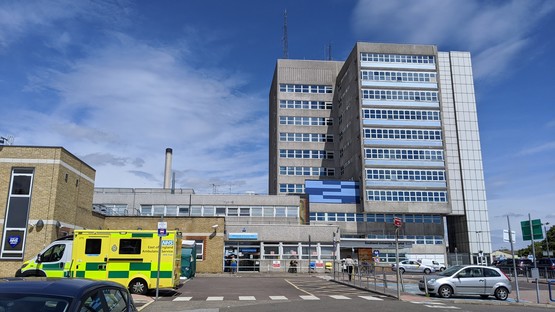 Ambulance Handover Unit at Southend Hospital Southend University Hospital will host an Ambulance Handover Unit from next week with space for up to 12 patients.We are working together with East of England Ambulance Service (EEAST) to reduce patient handover delays as ambulances arrive at the hospital.EEAST employees already work alongside hospital clinicians at handover and will continue to do this in the Ambulance Handover Unit. The facility will allow for some ambulances safely to handover patients meaning more vehicles and crews are available to attend emergencies in the south east Essex area. This is a temporary solution to ease pressures and help our hospital meet the anticipated increase in winter demand. The external unit will be used to ‘cohort’ patients, allowing supervision under a dedicated clinician, rather than tying up double- staffed ambulance crews to wait to handover a patient for admission to the hospital. Patients will be monitored regularly with nurses, healthcare assistants and ambulance crews checking on their condition before admission to the hospital emergency department.The Ambulance Handover Unit will be positioned near the ambulance unloading bays, and will support an improved patient experience and allow ambulance crews to finish their shifts on time. We expect this to be operational by the week commencing 31 October. |
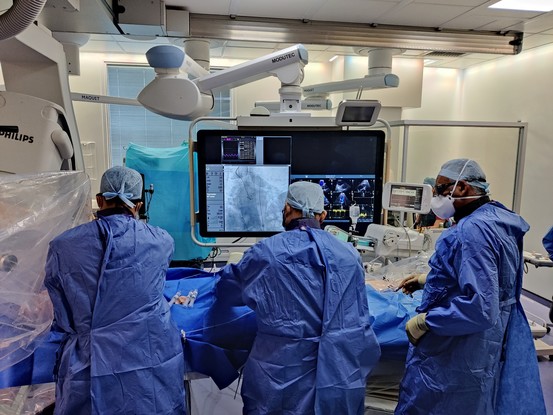 Specialist centre reaches heart-care milestone Patients are reaping the rewards after our cardiologists carried out their 500th procedure to treat those suffering from heart problems.Staff at the Essex Cardiothoracic Centre (CTC) have been replacing diseased and restricted heart valves for five years for patients who are unable to have conventional open-heart surgery.The procedure, known as transcatheter aortic valve implantation (TAVI), helps patients to recover from a thickening of the valve that controls the flow of blood from your heart to the rest of the body.A patient who benefitted from TAVI is Graham Francis, who said: “I was concerned about my symptoms and quite apprehensive about going into hospital. The doctors gave me honest, clear advice, and said that TAVI was my best option.”I’m now walking more, playing golf again, and even planning to visit my son in Spain. My life is back to normal.” Read more |
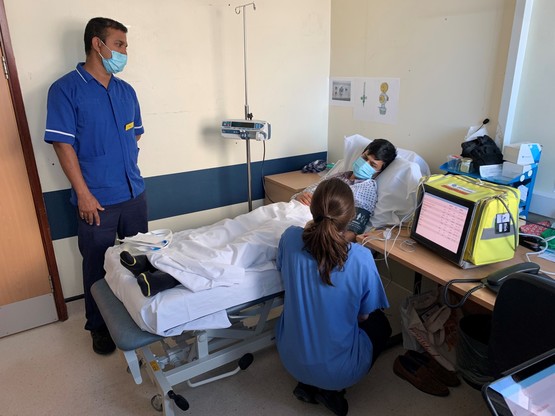 Training for emergencies while on the ward Our staff based at Basildon University Hospital are being encouraged to improve their skills through an innovative form of training that simulates a medical emergency in real time.In-site simulation presents staff with a high-risk scenario related to patient care that challenges them to use their training in a safe environment, with a view to improving teamwork and clinical practice. This is the first time the approach has been trialled on a ward.Staff on Elizabeth Fry ward, including Dr Sara Beqiri, a foundation year 1 doctor, simulated a patient with hyperkalaemia, a potentially serious condition caused by a high level of potassium in the blood.Dr Beqiri said: “The fact that the exercise was carried out unexpectedly helped to reinforce the learning. It was great working with nursing colleagues, as it helped make the simulation experience feel a lot more real. Overall a great experience!”If successful, the approach could be rolled out to Broomfield and Southend hospitals. Read more about our simulation successes here 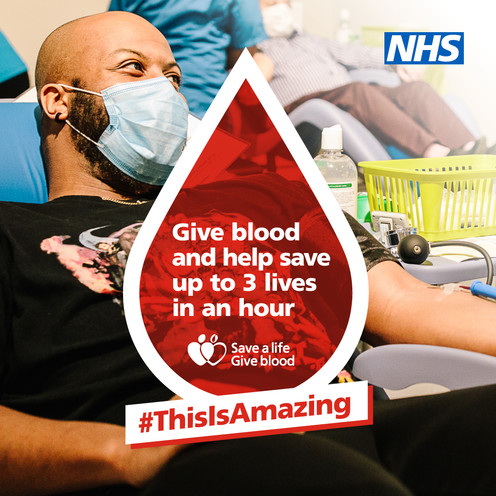 Blood donors urged to make appointments This month, NHS Blood and Transplant (NHSBT) issued an ‘amber alert’. This means that we, like other Trusts around the country, have been asked to put in place management plans to protect blood stocks.NHSBT are asking that existing donors with type O blood donate urgently if an appointment is available nearby. When you try to book, you may find that sessions are full, because of staffing challenges, but please make an appointment for future.If you are a new donor, they would still like to hear from you. It might take longer than normal for you to get an appointment as they are prioritising existing donors. Read more on blood.co.uk 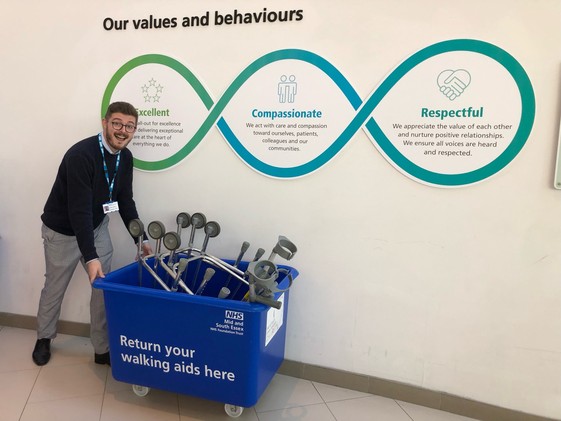 Walking aids amnesty will help future patients A campaign was launched at our hospitals during National Recycle Week (17-23 October) to help make it easier to return no longer used walking aids, such as crutches, walking sticks and walking frames.The returned equipment is placed in giant blue bins which will then be cleaned and refurbished, so that they can be given to new patients who need them, helping improve their recovery and mobility at home.Emma Willingham, Therapy Administrator at Broomfield Hospital, said: “We know how easy it is for crutches to be put away in the garage or in a cupboard under stairs and forgotten about once patients no longer need them, this is your chance to have a declutter and recycle your old walking aids.”Read more |
 SWF Health & Social Care Group